Travel & motoring tourism
Canada’s vast geography and limited public transit infrastructure make motoring tourism not just a recreational choice, but often the only practical way to explore the country’s most remarkable destinations. Spanning nearly 10 million square kilometers, Canada presents unique challenges that distinguish it from European or American road travel: cellular dead zones stretching hundreds of kilometers, wildlife crossings on major highways, and ferry connections that require advance booking weeks ahead.
Whether you’re planning a cross-country road trip through the Prairies, accessing remote natural sites via backcountry trails, or embarking on a multi-week motorcycle tour, successful motoring tourism in Canada demands specialized knowledge. This article introduces the core principles of planning, safety, and technical execution that transform ambitious travel ideas into achievable adventures, covering everything from fuel budgeting for 7,000-kilometer journeys to proper thumb positioning on off-road terrain.
Why Motoring Tourism Defines the Canadian Travel Experience
Unlike countries with extensive rail networks or affordable domestic flights, Canada’s geography creates natural dependencies on personal vehicles. The distance between major cities often exceeds 1,000 kilometers, with limited services in between. A drive from Vancouver to Halifax covers roughly the same distance as Lisbon to Moscow, yet passes through vast stretches where the nearest fuel station might be 200 kilometers away.
This reality shapes Canadian travel culture profoundly. Provincial and territorial parks, UNESCO sites, and coastal viewpoints frequently lie hours from the nearest airport, accessible only by road. Even urban Canadians planning weekend getaways must consider vehicle range, seasonal road conditions, and emergency preparedness as standard practice rather than exceptional precautions.
The vehicle becomes more than transportation—it serves as mobile shelter, emergency refuge during wildlife encounters, and the primary tool for accessing experiences impossible to reach otherwise. Understanding this context explains why topics like ground clearance, recovery equipment, and overnight vehicle sleeping strategies aren’t niche interests but practical considerations for anyone serious about exploring Canada beyond major urban corridors.
Planning Long-Distance Road Trips Across Canadian Terrain
Long-distance motoring tourism in Canada requires financial and logistical planning distinct from shorter trips. The scale of distances involved transforms seemingly minor details into significant factors that can derail poorly prepared travelers.
Budgeting Fuel and Accommodation
A cross-country journey easily accumulates 7,000 kilometers or more, with fuel representing a substantial expense that varies dramatically by region. Current pricing in remote areas can exceed urban rates by 30-40%, particularly in northern territories where supply logistics add costs. Calculate consumption based on highway efficiency, not city ratings, and add a 15% buffer for detours, idling during wildlife encounters, and air conditioning use during summer heat.
The accommodation decision—motels versus vehicle sleeping—impacts both budget and routing flexibility. While sleeping in your vehicle saves considerable expense over weeks of travel, it requires proper ventilation planning, safety considerations in urban areas, and awareness of local bylaws that may restrict overnight parking.
Managing Connectivity Gaps
Perhaps the most commonly underestimated challenge involves cellular network absence across vast regions. Standard GPS navigation that relies on data connections fails completely in areas like northern Ontario, central Saskatchewan, or interior British Columbia. This isn’t an inconvenience—it’s a safety issue when you can’t call for assistance after a breakdown or accident.
Download complete offline maps for your entire route before departure. Test that these maps function in airplane mode while still at home. Share your detailed itinerary with someone who will notice if you don’t check in as scheduled.
Ferry Crossings and Seasonal Logistics
BC Ferries routes and Marine Atlantic services to Newfoundland require reservations during peak seasons, sometimes booking out weeks in advance. Unlike toll bridges you simply drive across, these crossings operate on fixed schedules with limited daily sailings. Missing your reserved sailing can delay your journey by 24 hours or more, cascading through your entire trip timeline.
Navigating Remote and Wilderness Areas Safely
Accessing Canada’s most spectacular natural sites often means leaving paved highways for gravel roads, logging routes, or established trails where standard tourist infrastructure disappears entirely.
GPS Limitations in Backcountry Regions
Consumer GPS devices and smartphone navigation apps display confident routing even when their databases contain outdated or incorrect information about remote roads. A road shown as “accessible” may be washed out, decommissioned, or gated. Satellite view imagery can be years old, showing routes that no longer exist.
Cross-reference digital navigation with current paper maps from provincial park authorities or forestry services. Check with local visitor centers about recent road conditions before committing to backcountry routes. The “shortest” route calculated by your GPS may be impassable, while a longer alternative on maintained gravel remains open year-round.
Wildlife Encounters and Safety Protocols
Canadian highways and backcountry roads pass through active wildlife habitat where encounters with moose, elk, black bears, or even grizzlies occur regularly. A moose collision at highway speed often proves fatal to vehicle occupants due to the animal’s height and mass—its body impacts directly at windshield level.
Reduce speed during dawn and dusk hours when wildlife activity peaks. If you encounter large animals on the road, never exit your vehicle to photograph them or encourage them to move. Your vehicle provides protection; stepping outside eliminates that barrier. Use your horn from inside the vehicle, and wait patiently if necessary.
Fuel Planning for Remote Regions
Unlike urban driving where fuel stations appear every few kilometers, remote highway segments in Canada can stretch 200-300 kilometers between services. Seasonal closures of small-town stations add further uncertainty. The rule of thumb—refuel whenever you’re below half a tank—becomes critical rather than cautious when the next opportunity might be hours away.
Carry emergency fuel in approved containers if you’re planning backcountry exploration beyond established highways. Know your vehicle’s actual range, not the optimistic estimate from your trip computer.
Essential Off-Road Driving Techniques for Backcountry Access
Many of Canada’s most rewarding destinations—remote lakes, mountain viewpoints, abandoned mining sites, or pristine camping locations—require basic off-road capability and technique. These aren’t extreme rock-crawling skills, but fundamental practices that protect your vehicle and ensure safe passage.
Tire Pressure Management and Traction
Deflating tires for off-road conditions sounds counterintuitive to drivers accustomed to maintaining manufacturer-recommended pressures, but it’s essential for traction and safety on soft surfaces. Reduced pressure increases the tire’s contact patch, distributing weight over a larger area to prevent sinking into sand or mud while improving grip on loose gravel.
The appropriate pressure depends on terrain and vehicle weight, typically ranging from 15-20 PSI for soft sand to 20-25 PSI for rocky trails. Carry a reliable portable compressor to reinflate before returning to pavement, as highway driving on deflated tires damages sidewalls and reduces control.
Water Crossings and Ground Clearance
Stream crossings on backcountry routes require understanding your vehicle’s wading depth and air intake location. Water entering the engine through the air intake causes immediate catastrophic damage—a phenomenon called hydrolocking that can destroy an engine in seconds.
Scout crossings on foot first, checking depth and bottom firmness. Cross at a steady, slow pace that creates a small bow wave ahead of your vehicle without splashing water into the engine bay. Never enter water above your vehicle’s rated wading depth, and remember that ground clearance matters not just for rocks, but for determining safe water crossing depth.
Steering Grip and 4-Low Operation
Proper thumb position during off-road driving—outside the steering wheel rim rather than wrapped inside—prevents serious injury when the wheel violently jerks during rock impacts or rut crossings. Many experienced off-roaders have suffered broken thumbs by ignoring this fundamental safety practice.
Understanding when to engage 4-Low range separates successful backcountry navigation from stuck vehicles and damaged drivetrains. Low range provides maximum torque at minimal speed, essential for steep inclines, deep sand, or technical rock sections. It’s not meant for general gravel roads or simply because conditions look “rough”—improper use on high-traction surfaces can damage the transfer case.
Motorcycle Touring: Endurance and Logistics for Long Rides
Motorcycle tourism presents unique physical and logistical challenges that distinguish it from four-wheeled travel. Multi-day rides across Canadian distances demand specific preparation beyond basic riding skills.
Fatigue Management and Physical Endurance
Wind noise at highway speeds creates cumulative fatigue that riders often fail to recognize until their decision-making becomes impaired. Quality foam earplugs reduce wind roar while still allowing you to hear traffic and your engine—counterintuitively improving safety rather than compromising it. Many experienced touring riders consider earplugs as essential as helmets for rides exceeding two hours.
Dehydration compounds fatigue dramatically but goes unnoticed during riding because you’re not aware of fluid loss through breathing and perspiration. Unlike car drivers who can sip water while moving, motorcyclists must stop deliberately to hydrate. Schedule water breaks every 90-120 minutes regardless of whether you feel thirsty, as thirst indicates you’re already dehydrated.
Load Distribution and Weather Adaptation
Improperly balanced luggage affects motorcycle handling significantly, creating instability at highway speeds or during emergency maneuvers. Weight should distribute evenly between panniers, positioned low and close to the motorcycle’s center of gravity. A heavy load on one side creates constant correction pressure on the handlebars, accelerating arm fatigue over long distances.
Canadian weather variability—particularly in mountain regions or during shoulder seasons—means encountering rain during multi-day tours is nearly inevitable. Rather than stopping and waiting out every shower, invest in quality waterproof gear that allows continuing safely. The ability to ride through moderate rain without stopping preserves your itinerary flexibility and reduces exposure to hypothermia from wet clothing during stops.
Strategic Route Planning and Time Management
Effective route planning balances structure with flexibility, accounting for the realities of Canadian distances while preserving spontaneity that makes motoring tourism rewarding.
Downloading complete offline maps before departure proves critical not just for navigation, but for identifying alternative routes when unexpected construction, weather events, or wildlife closures block your planned path. Summer construction season across Canada creates frequent highway closures or delays, particularly on major routes through mountain passes or bridge replacement projects.
Realistic time estimates prevent the dangerous temptation to speed or skip necessary rest stops. Calculate driving time based on actual average speeds—typically 80-90 km/h on highways when accounting for fuel stops, food breaks, and scenic viewpoints, not the 110 km/h speed limit. A 600-kilometer day represents roughly seven hours of travel including stops, not the theoretical 5.5 hours of continuous driving.
The paradox of planning involves preparing thoroughly while avoiding rigid schedules that eliminate spontaneity. Over-planning every meal stop, photo opportunity, and overnight location creates stress when minor delays cascade. Build buffer days into longer trips, allowing flexibility to extend stays at unexpected discoveries or rest when fatigue exceeds expectations. Secure roadside rest areas provide safe overnight parking when motels aren’t available or you’re simply too tired to continue safely.
Motoring tourism across Canada rewards those who respect the scale, prepare systematically, and remain adaptable. The intersection of proper vehicle preparation, technical skill, and realistic planning transforms challenging distances and terrain into accessible adventures, opening experiences unavailable through any other travel mode.
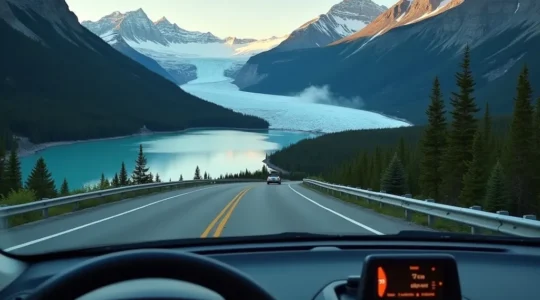
Canada Road Trip Planning: The Logistician’s Guide to Balancing Scenery and Fuel Costs
Planning a Canadian road trip isn’t about creating a perfect route; it’s about mastering the art of the strategic trade-off. GPS time estimates are a starting point, not a rule. Factoring in a 25% “buffer” for spontaneous stops and unpredictable…
Read more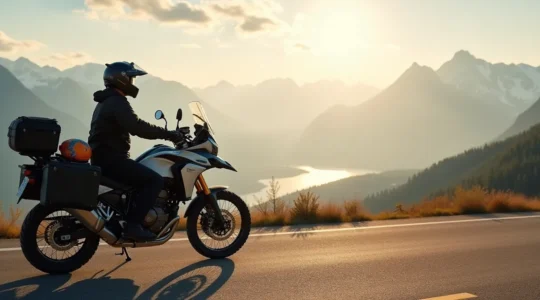
Long-Distance Motorcycle Touring: Packing Light and Staying Comfortable
Mastering a long-distance tour isn’t about having the right gear; it’s about defeating the physical forces that cause fatigue. Wind noise and poor weight distribution are your biggest energy drains, far more than the distance itself. Modern laminated gear and…
Read more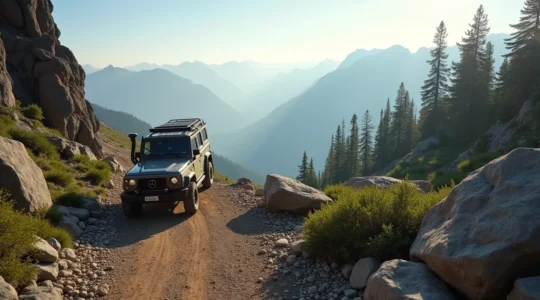
Off-Roading for Beginners: Essential Techniques to Avoid Getting Stuck
In summary: Mastering fundamental principles like tire pressure and wheel placement is more critical than vehicle modifications. Understanding your vehicle’s mechanical limits, such as air intake height and gear ratios, prevents catastrophic failures. Specific Canadian terrains, from Prairie mud to…
Read more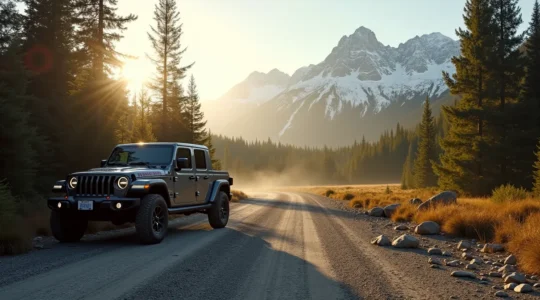
Beyond the Pavement: A Prudent Guide to Exploring Canada’s Backcountry Safely
Contrary to popular belief, the greatest danger in Canada’s remote landscapes isn’t wildlife, but misplaced faith in everyday technology like Google Maps and consumer vehicles like crossovers. This guide dismantles these assumptions, revealing that backcountry roads are often unmaintained industrial…
Read more
Trans-Canada Highway Road Trip: Must-See Stops From Victoria to St. John’s
In summary: A successful cross-Canada trip hinges on mastering logistics, not just sightseeing. Strategically plan fuel stops around provincial tax differences to significantly cut costs. Never rely solely on GPS; remote areas in Northern Ontario and the Rockies require offline…
Read more