Road safety
Road safety in Canada demands more than basic driving competence. From the icy highways of the Prairies to the fog-shrouded mountain passes of British Columbia, Canadian drivers face a unique combination of challenges that require specialized knowledge and skills. Understanding these challenges isn’t just about avoiding tickets or passing inspections—it’s about protecting lives, including your own.
This comprehensive resource brings together the essential knowledge every Canadian driver needs to navigate our diverse road conditions confidently. Whether you’re mastering winter driving techniques, preparing for a safety inspection, or learning to share forestry roads with industrial traffic, the principles covered here form the foundation of truly safe driving. These aren’t abstract theories but practical skills developed through decades of real-world experience on Canadian roads.
Mastering Winter and Extreme Weather Conditions
Canadian winters transform ordinary roads into technical challenges that test even experienced drivers. The difference between confident winter driving and dangerous situations often comes down to understanding a few critical principles that most driver education programs barely touch on.
Understanding Black Ice Formation
Black ice forms on bridges and overpasses before anywhere else due to a simple but often overlooked principle: air circulates beneath these structures, cooling them from both above and below. While the ground insulates regular pavement, keeping it warmer longer, bridge surfaces drop to freezing temperatures much faster. This is why you might drive on perfectly safe pavement and suddenly hit ice when crossing a bridge, particularly during temperature fluctuations around the freezing point.
In provinces like Ontario and Quebec, where freeze-thaw cycles are common throughout winter, this phenomenon creates particularly dangerous conditions. The ice appears “black” because it’s actually transparent, allowing you to see the dark pavement beneath—which tricks your brain into thinking the road is simply wet rather than frozen.
Skid Control Without Braking
When your vehicle begins to slide, your instinct screams at you to brake hard. This instinct is precisely what transforms a manageable skid into a serious collision. The correct response involves steering in your intended direction while maintaining throttle or gently accelerating. This technique, often called “powering through,” seems counterintuitive but works because it maintains weight transfer to your drive wheels, giving them the best chance of regaining traction.
Think of it like riding a bicycle: when you start to tip over, you don’t stop pedaling—you steer toward your fall and maintain momentum to regain balance. The same physics applies to your vehicle on slippery surfaces.
Tire Selection for Canadian Winters
The studded versus friction tire debate has a clear answer that depends entirely on your driving environment. Studded tires excel on solid ice, providing superior grip through mechanical penetration. However, they lose effectiveness on dry pavement and in slushy conditions. Friction tires with advanced tread compounds perform better in the variable conditions most Canadian drivers actually encounter: intermittent snow, slush, wet pavement, and occasional ice.
For urban drivers in cities like Vancouver, Calgary, or Toronto, friction tires typically offer the best overall performance. For rural drivers in northern regions or those regularly traveling on unplowed roads, studded tires may justify their drawbacks.
Vehicle Safety Inspections and Compliance
Provincial safety inspections serve as gatekeepers for vehicle registration, but they’re also comprehensive health checks that identify problems before they become roadside emergencies. Understanding what inspectors look for helps you maintain your vehicle properly year-round, not just before inspection day.
Common Inspection Failures
Certain issues guarantee automatic failure across all Canadian provinces. A cracked windshield within the driver’s field of vision tops this list because even small cracks compromise structural integrity and distort your view of critical areas. Similarly, an illuminated ABS warning light indicates a serious safety system malfunction that must be resolved before the vehicle can pass.
Tire age presents another frequent failure point that surprises many owners. Even tires with adequate tread depth fail inspection if they’re older than the manufacturer’s recommended service life, typically around six years. The rubber compounds degrade over time regardless of wear, becoming dangerously hard and losing grip—particularly critical in Canadian winter conditions.
Pre-Inspection Preparation
Smart drivers perform their own pre-inspection check weeks before the scheduled appointment. Start by testing your parking brake on a moderate incline—it should hold the vehicle firmly without creeping. Check all lights, including often-forgotten license plate illumination and side markers. Inspect tire tread depth using the quarter test: insert a quarter into the tread with the caribou’s nose pointing down; if you can see its nose, the tread is too shallow.
Understanding inspection validity periods also matters. In most provinces, your inspection certificate remains valid for a specific period, typically between 30 and 36 days, giving you a window to complete registration. Missing this deadline means repeating the entire inspection process and paying fees again.
Defensive Driving Fundamentals
Defensive driving transforms you from a passive road user into an active safety manager who anticipates and prevents dangerous situations before they develop. This mindset shift represents the single most effective way to reduce collision risk, far exceeding any technological safety feature.
The Visual Scan Technique
Most drivers focus their attention too close to their vehicle, typically just 3 to 5 seconds ahead. This short visual range leaves insufficient time to recognize and respond to developing hazards. The 15-second visual scan means looking far enough ahead that you’d reach that point in approximately 15 seconds at your current speed. On highways at 100 km/h, this translates to scanning roughly 400 meters ahead—about four city blocks.
This extended visual range allows you to notice brake lights activating in a chain reaction, spot traffic signals changing in the distance, and identify potential hazards like vehicles waiting to enter your lane. Think of it like playing chess: novices focus on the current move, while experts see several moves ahead.
Managing Space and Following Distance
The traditional three-second following distance rule serves as a baseline for ideal conditions, but Canadian winter driving often demands doubling or tripling this buffer. The principle is simple: identify a fixed reference point ahead, note when the vehicle in front passes it, then count how long until you reach the same spot. In snow or rain, aim for at least six seconds.
Equally important is maintaining escape routes. Before changing lanes or approaching intersections, ask yourself: “If the unexpected happens right now, where can I go?” This mental habit of always preserving an exit strategy has prevented countless collisions by ensuring drivers have somewhere to steer when braking alone isn’t enough.
Sharing the Road With Commercial Vehicles
Canadian forestry roads and industrial routes present unique challenges where standard defensive driving principles require adaptation. Logging trucks, mining equipment, and other heavy commercial vehicles operate under different physics and priorities than passenger cars.
The unwritten rule on resource roads is straightforward: heavy vehicles have priority, not because of legal right-of-way but because of practical reality. A fully loaded logging truck descending a grade cannot stop quickly and may not physically fit past your vehicle on narrow sections. Understanding this dynamic means actively monitoring for approaching trucks, pulling into designated pullouts, and using CB radio channel 19 to announce your presence and location using kilometer markers.
Dust presents another serious hazard on unpaved resource roads. When visibility drops to zero in dust clouds, resist the temptation to stop on the roadway. Maintain steady speed, turn on headlights and hazard flashers, and use road edge lines or the difference in surface feel between pavement and shoulder to navigate. Most importantly, never park in emergency escape lanes designated for runaway trucks—these areas must remain clear for vehicles with brake failures.
Adapting to Challenging Terrain
Off-pavement driving—whether on construction sites, cottage access roads, or during emergency situations—requires understanding how different surfaces interact with your tires. The fundamental principle is momentum management: knowing when to maintain speed and when to slow down.
In mud or soft sand, momentum is your ally. Reducing speed excessively allows your tires to dig in rather than skim across the surface. Conversely, on rocky descents or loose gravel, momentum becomes your enemy. Hard braking on unstable surfaces instantly breaks traction, potentially sending your vehicle into a skid or slide. The correct technique involves selecting an appropriate low gear before the descent and using engine braking to maintain controlled speed without touching the brake pedal.
Learning to “read” surface stability before committing your full vehicle weight prevents costly stuck situations. Look for vegetation, existing tracks, and surface texture to assess whether ground will support your vehicle or give way beneath it.
The Physics of Emergency Stopping
Understanding stopping distances isn’t about memorizing formulas—it’s about recognizing that your vehicle’s ability to stop depends on factors that change constantly. Perception and reaction time alone consume approximately 1.5 seconds before your foot even touches the brake, during which your vehicle continues at full speed. At 80 km/h, this represents about 33 meters of travel before braking even begins.
Vehicle weight dramatically affects stopping distance through momentum. A loaded SUV or truck carries significantly more kinetic energy than the same vehicle empty, requiring additional distance to stop even with identical braking force. This explains why following distances must increase with cargo load.
Rain reduces tire grip by creating a thin water layer between rubber and pavement. This doesn’t just slightly increase stopping distance—it can nearly double it. Adjusting your following distance in wet conditions isn’t overcautious; it’s responding to genuine physics. When other drivers tailgate you aggressively, resist the temptation to “teach them a lesson” by brake-checking. Instead, increase your own following distance to create a larger buffer that compensates for their poor decisions.
Navigating Low Visibility Conditions
Driving when you cannot adequately see the road demands techniques that go beyond simply turning on lights. Heavy snow creates a particularly dangerous phenomenon called snow blindness or highway hypnosis—the swirling flakes illuminated by your headlights create a mesmerizing effect that disrupts depth perception and can induce a trance-like state.
High beams in fog, heavy snow, or rain actually reduce visibility by reflecting light back into your eyes. Low beams aimed downward illuminate the road surface more effectively. Hazard flashers serve a specific purpose: signaling that your vehicle has become an unexpected obstacle, such as when forced to stop on a roadway shoulder due to mechanical failure. Using them while moving in low visibility confuses other drivers about your intentions and should be avoided.
When visibility deteriorates to dangerous levels, the safest action is exiting the roadway completely at a designated rest area or exit. If you must stop on the shoulder, pull as far right as possible, turn on hazard flashers, and remain in your vehicle with seatbelt fastened unless immediate danger forces evacuation.
Managing Driver Distraction
Modern vehicles offer countless ways to divert your attention from driving, and Canadian provincial laws increasingly restrict these distractions. However, legal compliance represents only minimum standards—true safety requires understanding how different activities impact your cognitive capacity.
Hands-free phone conversations seem safer than handheld calls, and they are from a manual control perspective. However, research consistently shows that cognitive distraction remains nearly identical whether holding the phone or not. Your brain diverts processing power to the conversation, reducing the attention available for recognizing and responding to road hazards. This explains why hands-free calls remain dangerous even where legal.
Eating while driving, GPS programming, and managing children all compete for the same limited attention resources. The solution isn’t perfect avoidance—that’s unrealistic for most drivers—but rather timing these activities appropriately. Program navigation before departing, not while merging onto a highway. If children require attention, find a safe place to pull over rather than twisting around while driving. Many smartphones now offer driving modes that automatically silence notifications and calls, removing the temptation entirely.
Road safety ultimately comes down to decision-making under pressure. The techniques and knowledge covered here provide the foundation, but consistent application matters most. Each trip presents opportunities to practice these skills, building the experience and judgment that separate truly safe drivers from those who’ve simply been lucky so far. By understanding the physics, psychology, and practical techniques that prevent collisions, you’re investing in protection that no airbag or electronic system can match—the ability to avoid dangerous situations entirely.
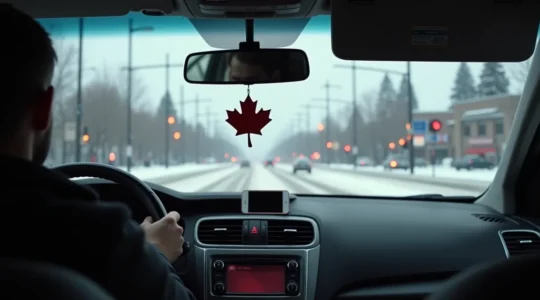
Distracted Driving Laws in Canada: Penalties, Demerit Points, and Prevention
Contrary to popular belief, distracted driving laws in Canada are not just about texting; they penalize any activity that impairs your cognitive focus on the road, turning even a seemingly innocent act into a major conviction. Simply holding a phone…
Read more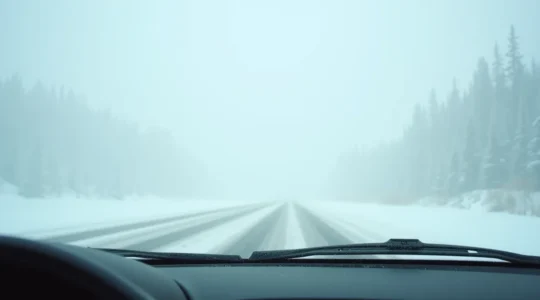
Driving in Whiteout Conditions: When to Slow Down and When to Pull Over
Forget everything you think you know about winter driving; a whiteout is a survival situation, not a traffic problem. Your high beams are your enemy. They create a “white wall” that blinds you, making a bad situation worse. Feeling the…
Read more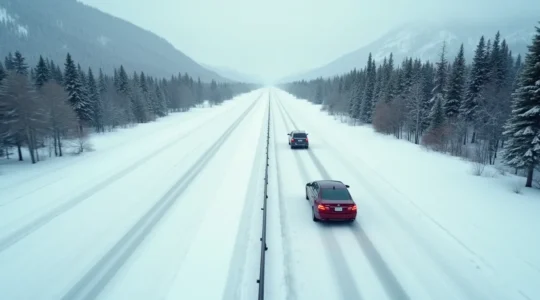
Stopping Distances Explained: The 3-Second Rule and Weather Factors
Contrary to popular belief, the “3-second rule” is not a cautious suggestion; it’s a simplified expression of immutable physical laws. Your total stopping distance is a non-negotiable sum of perception-reaction time and braking capability. This article deconstructs this formula, demonstrating…
Read more
Defensive Driving Principles: The Smith System and Anticipating Hazards
Driving in dense traffic doesn’t have to be a stressful battle. True defensive driving is a mental discipline, not just a set of rules. By adopting the Smith System’s philosophy of proactive perception, you learn to manage space and time…
Read more
Driving on Sand, Mud, and Gravel: Adjusting Your Technique for Each Surface
The key to mastering unstable terrain isn’t your vehicle’s 4WD system; it’s proactively managing your vehicle’s finite “traction budget.” Momentum is a stored energy asset that must be precisely controlled to either float over or power through different surfaces. Every…
Read more
Driving on Active Logging Roads: Rules of the Road and CB Radio Etiquette
Driving a logging road isn’t a scenic detour; it’s entering a live industrial worksite where the laws of physics are the only laws that matter. A loaded truck is a 130,000-pound train on gravel; it cannot and will not stop…
Read more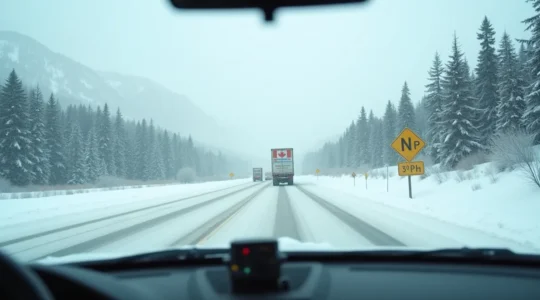
Preventing Rear-End Collisions: A Guide to Safe Following Distances on Snowy Canadian Highways
The key to preventing winter collisions isn’t just leaving more space; it’s adopting a proactive space management system that anticipates hazards before they happen. Your reaction time and your vehicle’s stopping distance are drastically compromised on snow and ice, making…
Read more
Passing the Ontario Safety Standards Certificate: A Checklist for Sellers
Passing the Ontario Safety Standards Certificate (SSC) is not about having a perfect car; it is about meeting specific, non-negotiable technical thresholds for core safety systems. An illuminated ABS or Airbag (SRS) warning light is an automatic failure, regardless of…
Read more
Black Ice Driving Techniques: How to Regain Control on Frozen Roads
The key to surviving black ice is not what you do, but what you *don’t* do; your survival instincts are your greatest enemy. A skid on ice is a crisis of traction, not speed. Slamming the brakes is the most…
Read more