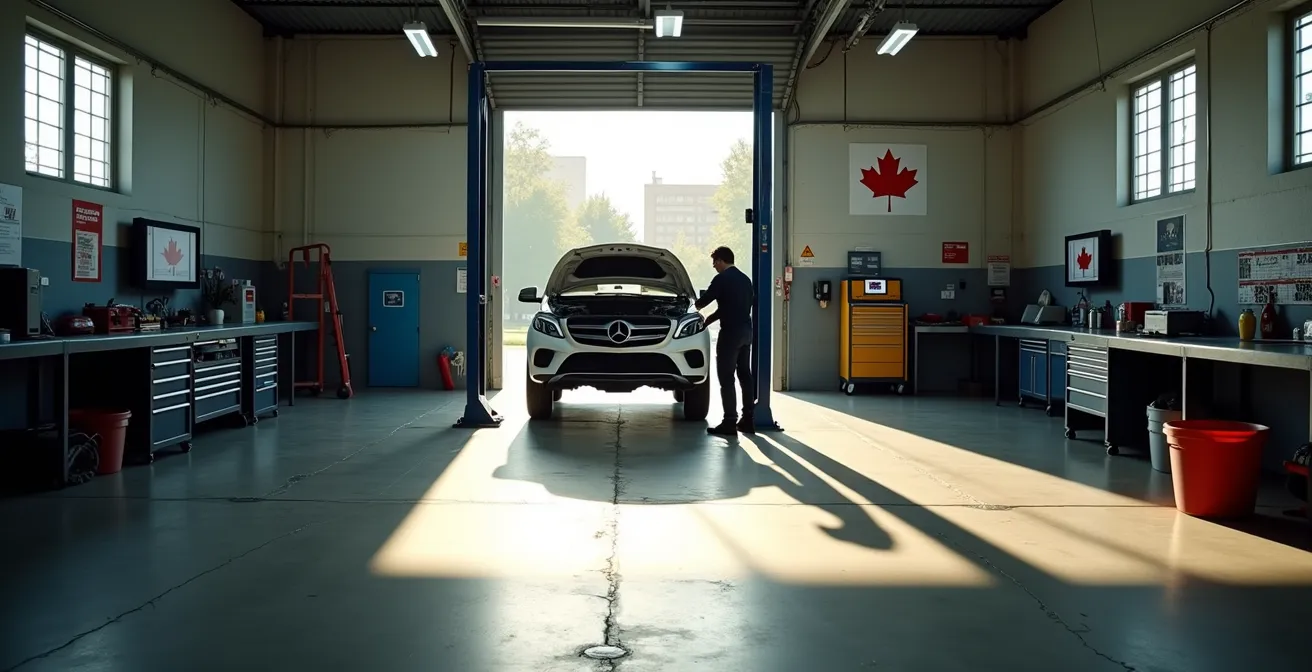
Passing the Ontario Safety Standards Certificate (SSC) is not about having a perfect car; it is about meeting specific, non-negotiable technical thresholds for core safety systems.
- An illuminated ABS or Airbag (SRS) warning light is an automatic failure, regardless of the vehicle’s otherwise good condition.
- Tires can be rejected for being too old (past their manufacturing date), even with sufficient tread depth, due to rubber degradation.
- The SSC does not evaluate the engine’s or transmission’s mechanical health; it is strictly a safety systems inspection.
Recommendation: Before booking your inspection, perform a self-assessment using the specific measurement criteria outlined in this guide to identify and rectify automatic-fail items, saving you time and the cost of a re-inspection.
The Ontario Safety Standards Certificate (SSC) is a mandatory requirement for registering a rebuilt vehicle, transferring a used vehicle to a new owner, or registering a vehicle brought in from another province. For a seller, providing a valid SSC is a crucial step in a smooth transaction. For a buyer, it is the legal gatekeeper to getting their new vehicle on the road. However, many individuals approach the inspection with a fundamental misunderstanding of its purpose. They often confuse it with a comprehensive mechanical assessment, leading to frustration when a seemingly “good” car fails.
The common advice is to “check your brakes and tires,” but this superficial approach overlooks the precise, data-driven criteria that a licensed Motor Vehicle Inspection Station (MVIS) technician is required to follow. The inspection is not subjective; it is a normative process governed by specific failure thresholds. This guide moves beyond generic checklists to provide the technical perspective of a certified inspector. It will detail not just what is checked, but *why* it fails and the exact standard it is measured against, from the structural integrity of your windshield to the chemical age of your tires. We will also clarify critical misconceptions, such as the role of the engine compression test and the implications of the certificate’s strict 36-day validity period.
Understanding the inspection logic is the key to preparing effectively. This article will walk you through the critical systems a technician examines, explaining the technical standards required to pass. By thinking like an inspector, you can anticipate potential issues, avoid common traps, and ensure your vehicle meets the province’s safety mandate without unnecessary delays or expenses.
Summary: Your Ontario Safety Certificate Technical Guide
- Why a crack in the field of view costs you your safety certificate
- How to know if your parking brake is strong enough for the provincial standards
- ABS or Airbag light: which one prevents getting the safety certificate?
- The manufacturing date trap: why can tires with good tread be rejected?
- When to get the inspection: why does the certificate expire after 36 days?
- How a mechanic checks engine compression in 1 hour
- Why your summer tires become ‘hockey pucks’ under 7°C
- Winter Tires in Quebec: Legal Deadlines and Tread Depth Requirements
Why a crack in the field of view costs you your safety certificate
A vehicle’s windshield is not merely a weather shield; it is a critical structural component and essential to driver visibility. During an Ontario Safety Inspection, the technician assesses the windshield not just for its presence, but for its integrity. The regulations are highly specific regarding damage, particularly within the area cleared by the windshield wipers, known as the “driver’s field of view.” The primary reason for failure is the potential for damage to obstruct vision or compromise the windshield’s structural role in a collision or rollover.
The failure threshold is precise. Any single crack that extends into the wiper-swept area measuring 50mm or longer is cause for rejection. Similarly, “star chips” or “bullseyes” must be no larger than 13mm in diameter within this same critical zone. The logic is that larger cracks can refract light, create distracting glare, and obscure pedestrians or other vehicles. Damage outside the wiper area is also assessed, but the focus is on whether it could spread and compromise the overall structural integrity.
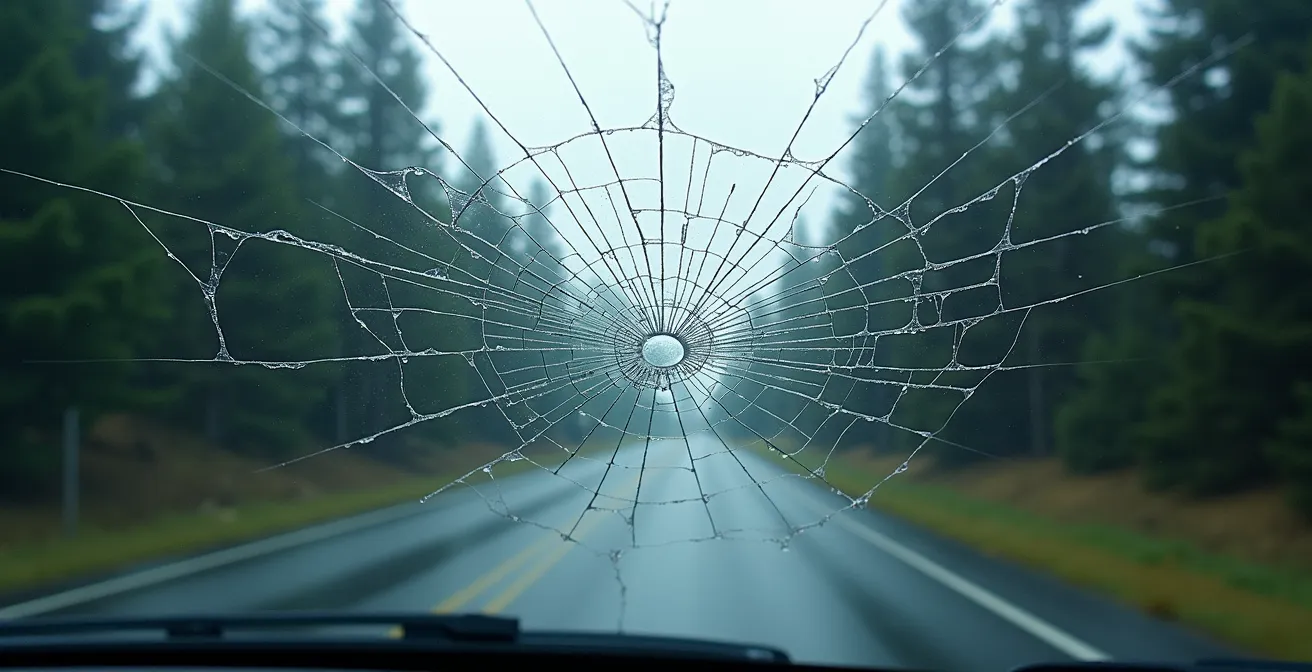
As this image illustrates, the measurement is not an estimate. A technician will use a measuring tool to confirm the exact size of the damage. Edge cracks are also a significant concern, as they can weaken the entire pane of glass, increasing the risk of catastrophic failure under stress. Any damage that hinders the driver’s clear view of the road is grounds for rejection, making windshield condition a primary checkpoint in any pre-inspection assessment.
Your Windshield Damage Self-Assessment Checklist
- Measure Wiper Area Cracks: Identify any crack that extends into the area cleared by the wipers. It must be under 50mm in length to pass.
- Check Star Chips: Locate any star-shaped chips or bullseyes in the wiper area. They must be less than 13mm in diameter.
- Verify Structural Integrity: Inspect for cracks outside the wiper area that could spread or affect the windshield’s bond to the vehicle frame.
- Inspect for Edge Cracks: Carefully check the perimeter of the windshield for any cracks originating from the edge, as these can severely compromise its strength.
- Seek Professional Assessment: If any damage is borderline, it is advisable to get it evaluated by a glass professional before the formal safety inspection.
How to know if your parking brake is strong enough for the provincial standards
The parking brake, or emergency brake, is a redundant braking system mandated for safety. Its function is to hold the vehicle stationary, especially on an incline, independent of the primary hydraulic brake system. An inspector’s test is straightforward: the parking brake must be capable of holding the vehicle stationary on a specified grade, with the transmission in neutral. Failure indicates insufficient holding power, which is an immediate rejection.
The failure mode depends on the type of system. Traditional cable-operated systems fail due to stretched or seized cables, or worn-out brake shoes/pads within the parking brake assembly. A technician tests this by applying the brake and ensuring the vehicle does not move. They also check that the brake fully releases; a partially seized brake that causes drag is also a failure point. Modern vehicles often feature an Electronic Parking Brake (EPB). These systems typically fail due to electronic faults, such as a faulty switch, wiring issue, or a malfunctioning actuator motor, which will usually trigger a warning light on the dashboard.
Case Study: Electronic Parking Brake (EPB) vs. Cable-Operated Systems
During an Ontario inspection, modern Electronic Parking Brakes (EPB) present different failure symptoms than traditional cable systems. EPB failures often manifest as dashboard warning lights indicating electronic faults within the system. In contrast, older cable systems typically fail due to mechanical issues, such as insufficient holding power from a stretched cable or a brake that does not fully release, causing drag. Both systems are subject to the same performance standard: they must hold the vehicle stationary on the required grade to pass the safety certificate.
While testing the parking brake, the technician will also perform a visual inspection of the entire braking system. This includes ensuring the brake shoe or pad lining thickness falls below 1.6 mm, as this is the minimum legal limit. A parking brake that feels weak or requires excessive force to engage is a clear sign that service is required before an inspection is attempted.
ABS or Airbag light: which one prevents getting the safety certificate?
This is one of the most common and least understood points of failure. The direct answer is: both. An illuminated Anti-lock Braking System (ABS) light or a Supplemental Restraint System (SRS), commonly known as the airbag light, is an automatic failure of the Ontario Safety Inspection. There is no grey area or technician discretion on this point. These lights are not mere suggestions; they are indicators of a fault within a critical, federally mandated safety system.
An illuminated ABS light signifies that the anti-lock functionality is compromised. While the primary hydraulic brakes may still function, the system designed to prevent wheel lock-up during emergency braking is not operational. Similarly, the SRS/Airbag light indicates a fault in the airbag deployment system, which could mean the airbags will not deploy in a collision. Since 2015, MTO standards explicitly state that these systems must be fully functional. As a result, Both ABS and SRS/Airbag warning lights result in automatic inspection failure.
For sellers, this can be a costly surprise. The repair often involves more than replacing a fuse. It can require diagnosing and replacing components like wheel speed sensors, the ABS control module, a clock spring in the steering column, or the SRS control module. These repairs can range from a few hundred to over a thousand dollars, as shown in this comparative analysis of typical repair costs.
| Issue | Vehicle Type | Typical Cost Range (CAD) |
|---|---|---|
| Clock Spring (Airbag) | Honda Civic | $350-$450 |
| Wheel Speed Sensor (ABS) | Ford Escape | $200-$300 |
| ABS Module | Toyota Corolla | $800-$1,200 |
| SRS Control Module | Mazda CX-5 | $600-$900 |
The inspection logic is clear: if the vehicle’s self-diagnostic system reports a critical safety failure, the vehicle is not considered roadworthy by provincial standards. Before scheduling an inspection, the first step should be to start the car and ensure that all dashboard warning lights illuminate briefly and then turn off. If the ABS or SRS light remains on, it must be diagnosed and repaired beforehand.
The manufacturing date trap: why can tires with good tread be rejected?
Tire condition is a major focus of the safety inspection, but many vehicle owners only consider one metric: tread depth. While the minimum legal tread depth in Ontario is 1.6mm (2/32 of an inch), a tire with ample tread can still be the reason for a failed inspection. This is due to the “manufacturing date trap.” Rubber is a natural compound that degrades over time due to exposure to UV light, heat, and ozone. After several years, the tire’s chemical composition changes, causing it to become hard and brittle, a process known as material degradation.
An old tire, even one with deep tread from sitting in storage, loses its elasticity and grip. It is more prone to developing cracks in the sidewall (weather rot) and has a significantly higher risk of catastrophic failure (a blowout) under load. Inspectors are trained to spot this degradation. More importantly, they check the tire’s manufacturing date, which is encoded on the sidewall.
Every tire has a Department of Transportation (DOT) code. The last four digits of this code indicate the week and year the tire was made. For example, a code ending in “2519” means the tire was manufactured in the 25th week of 2019. While there is no explicit age limit in the MTO regulations, most tire manufacturers and safety organizations recommend replacing tires that are 7 to 10 years old, regardless of tread wear. An inspector can fail a tire based on visible signs of age-related cracking or rot, even if it is technically younger.
How to Read and Assess Your Tire’s DOT Code
- Locate the DOT Code: Find the series of characters on the tire’s sidewall that begins with “DOT”.
- Identify the Date: Look at the last four digits of the code. The first two represent the week, and the last two represent the year of manufacture (e.g., 2519 = 25th week of 2019).
- Calculate Tire Age: Subtract the manufacture year from the current year to determine the tire’s age.
- Inspect for Cracking: Regardless of tread depth, carefully inspect the sidewalls and the area between the tread blocks for fine cracks or “weather rot.”
- Budget for Replacement: If a tire is over 7 years old, it is prudent to budget for its replacement, even if it currently has sufficient tread.
When to get the inspection: why does the certificate expire after 36 days?
Passing the safety inspection is only half the battle; the timing is equally critical. An Ontario Safety Standards Certificate is a snapshot of a vehicle’s condition on a specific day. Because components can wear out or fail, the province limits the certificate’s validity. According to official MTO regulations, an SSC is valid for a period of 36 calendar days from the date of the inspection. This short window is designed to ensure the vehicle’s safety status is current at the time of ownership transfer.
This 36-day expiry creates a logistical challenge for private sellers. If you get an inspection too early, the certificate could expire before you find a buyer, forcing you to pay for another inspection. If you wait until you have an interested buyer, any unexpected repairs could delay the sale and potentially cause the buyer to walk away. This strict timeline demands a strategic approach to the sales process.
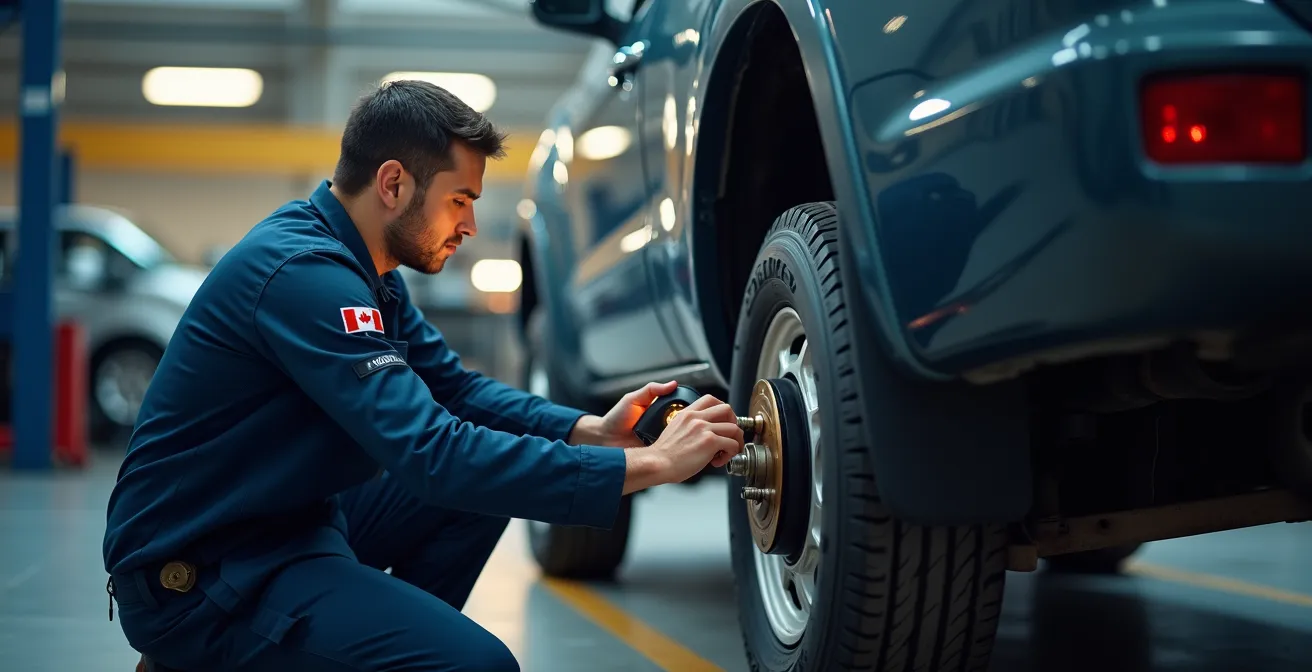
The certificate must be valid when the buyer goes to ServiceOntario to register the vehicle in their name. This means the 36-day countdown is not to the date of sale, but to the date of registration. A delay in the buyer’s paperwork could render a perfectly good certificate useless. Therefore, coordinating the inspection with the final sale and ownership transfer is paramount.
Case Study: Strategic Timing for Private Sales
A common and effective strategy used by many Ontario sellers is to make the final sale conditional on the vehicle passing its safety inspection. This approach protects both parties. The seller avoids the upfront cost of an inspection that might expire before a buyer is found. The buyer, in turn, receives assurance that the vehicle will meet the required provincial safety standards before finalizing the purchase. In this scenario, the inspection is typically performed after the price has been agreed upon but before the final payment and ownership transfer are completed, mitigating the risk of the 36-day certificate expiring.
How a mechanic checks engine compression in 1 hour
This question highlights the single most significant misconception about the Ontario Safety Standards Certificate. A mechanic does not check engine compression during a safety inspection. The SSC is exclusively concerned with the vehicle’s safety systems, not its mechanical condition or long-term reliability. As the official MTO regulations state, a compression test is simply not on the checklist.
A compression test is NOT part of the Ontario Safety Standards Certificate. The SSC is exclusively for safety systems, not mechanical engine health.
– Ontario MTO Regulations, Vehicle Inspection Standards
A car with a failing engine that burns oil and has low compression can still pass a safety inspection, provided its brakes, tires, steering, suspension, and lights meet the standard. Conversely, a car with a pristine, low-mileage engine will fail if it has an airbag light on. This distinction is what defines “safety vs. reliability.” The SSC ensures the car is safe to operate on public roads at that moment; it offers no guarantee about how long the engine will last.
For a buyer, this is a critical point. To assess the engine’s health, a separate service known as a Pre-Purchase Inspection (PPI) is required. During a PPI, a mechanic will perform tests like a compression check, which involves removing the spark plugs, threading a pressure gauge into each cylinder, and cranking the engine to measure the pressure it generates. This test reveals the health of the piston rings, valves, and head gasket. A PPI is a comprehensive mechanical evaluation that goes far beyond the scope of the government-mandated safety check.
Case Study: Pre-Purchase Inspection vs. Safety Certificate
While the Ontario Safety Inspection Checklist ensures a vehicle complies with road safety regulations, it does not reveal the vehicle’s underlying mechanical condition. A Pre-Purchase Inspection (PPI) is a much more thorough examination that goes beyond safety items. A PPI assesses the engine’s compression, the health of the transmission, the condition of the cooling system, and other vital mechanical components. These are systems that could lead to thousands of dollars in repairs but are not covered by the SSC, making a PPI a wise investment for any used car buyer.
Why your summer tires become ‘hockey pucks’ under 7°C
The phenomenon of summer tires losing their effectiveness in the cold is rooted in material science. The rubber compounds used in summer performance tires are formulated to provide maximum grip and durability in warm temperatures. This compound is relatively hard to withstand heat and high speeds. However, as the ambient temperature drops below 7° Celsius (45° Fahrenheit), this rubber undergoes a physical change. It loses its elasticity and becomes significantly harder and stiffer, much like a hockey puck.
When this happens, the tire’s ability to conform to the road surface is drastically reduced. The hardened tread block can no longer provide the necessary friction, resulting in a dangerous loss of grip. Braking distances increase dramatically, and cornering ability becomes unpredictable, especially on cold, damp, or icy surfaces. This is not a defect; it is the designed behaviour of the tire compound outside its intended operating range. All-season tires use a more versatile compound that remains flexible at lower temperatures, offering a compromise between summer and winter performance. Winter tires use a compound rich in silica that stays soft and pliable even in deep cold, allowing them to maintain grip.
For an Ontario Safety Inspection, the type of tire is also critical. A vehicle will fail if it has mismatched tire types (e.g., two all-seasons and two winter tires). All four tires must be of the same category. Since late 2024, all inspection results are logged digitally into a centralized provincial database, a system known as DriveON, which became fully mandatory in late 2024. This system ensures that all checks, including tire type and condition, are recorded consistently across all inspection stations.
Tire Compliance Checklist for Ontario Safety Inspection
- Verify Tire Type: Confirm that all four tires on the vehicle are of the same type (e.g., all are all-season, all are winter, or all are all-weather).
- Check for M+S Designation: For all-season tires, ensure they are marked with “M+S” (Mud and Snow), which makes them acceptable for year-round use in Ontario.
- Look for Snowflake Symbol: Winter or all-weather tires must display the Three-Peak Mountain Snowflake (3PMSF) symbol to be legally classified as such.
- Ensure No Mismatching: A mix of different tire types (e.g., winter on the front, all-season on the rear) is an automatic failure.
- Consider Tire Sets as a Value-Add: When selling a vehicle between October and April, having a compliant set of winter or all-weather tires can be a significant selling feature.
Key Takeaways
- An Ontario Safety Certificate is a legal requirement for ownership transfer and plating, not a guarantee of mechanical reliability.
- Specific, measurable failure thresholds exist for key components like windshield cracks (50mm), brake pad thickness (1.6mm), and tire tread depth (1.6mm).
- Any active ABS or SRS/Airbag warning light is an absolute and automatic inspection failure, with repairs often costing several hundred to over a thousand dollars.
Winter Tires in Quebec: Legal Deadlines and Tread Depth Requirements
The conversation about tires becomes even more specific when dealing with inter-provincial vehicle sales, particularly between Ontario and Quebec. While Ontario encourages the use of winter tires through insurance discounts, they are not legally mandatory. Quebec, however, has a strict provincial law mandating their use. From December 1st to March 15th, all passenger vehicles registered in Quebec must be equipped with tires bearing the Three-Peak Mountain Snowflake (3PMSF) symbol.
This creates a common scenario for an Ontario seller: what if a Quebec resident wants to buy your car in the middle of winter, and it’s equipped with all-season tires? From an Ontario perspective, the transaction is straightforward. Your vehicle can pass its Ontario Safety Certificate with M+S rated all-season tires, as they meet the provincial standard. You can legally sell the car and transfer ownership.
However, the responsibility then shifts entirely to the Quebec buyer. Upon returning to their home province, they will be unable to legally register and plate the vehicle until it is fitted with compliant winter tires. This is a critical point of negotiation and disclosure in a private sale. An informed Ontario seller should communicate this clearly to a potential Quebec buyer to avoid disputes after the sale. The cost of a new set of winter tires (often over $800 CAD) can be a significant unexpected expense for an unprepared buyer. The general cost for an SSC itself in Ontario ranges from $60 to $120 on average, but this does not include the potential cost of new tires for another province’s regulations.
To successfully pass the Ontario Safety Standards Certificate, a seller or buyer must shift their mindset from a general overview to a detailed, technical assessment. Addressing the specific, non-negotiable failure points before the official inspection is the most efficient and cost-effective strategy. Ensure your vehicle meets these precise standards to facilitate a smooth and legally compliant transfer of ownership.
Frequently Asked Questions on Ontario Safety Certificate
What is the minimum tread depth for Ontario safety inspection?
The minimum tread depth is 1.6mm (2/32 of an inch) for all tires to pass the safety inspection in Ontario. Any tire with tread worn down to this level or below will result in an automatic failure.
Can I sell my Ontario car to a Quebec buyer without winter tires?
Yes, as the seller, you can obtain an Ontario Safety Certificate and complete the ownership transfer with compliant all-season tires. However, the Quebec buyer will be legally required to install compliant winter tires on the vehicle before they can register it in their home province during the mandatory period (Dec 1 – Mar 15).
What tire defects cause automatic inspection failure?
Beyond tread depth, several other tire defects lead to an automatic failure. These include any visible sidewall bulges, exposed cords or belts, improper repairs such as plugs in the sidewall area, and any cuts or damage that compromises the tire’s structural integrity.