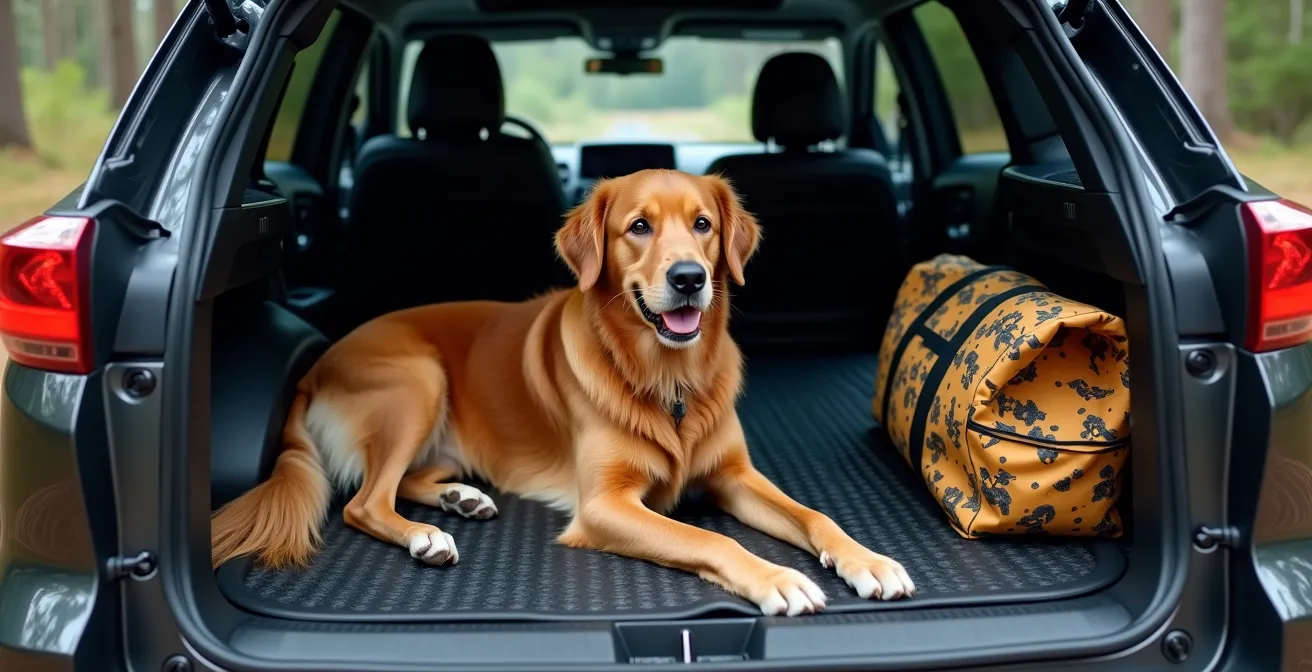
A quality cargo liner is not an accessory; it’s a strategic investment in your vehicle’s long-term value and structural integrity, especially in Canada.
- Simple blankets and universal mats fail to contain moisture, leading to rust, and don’t prevent abrasion from heavy loads.
- Key features like high walls, full seat-back coverage, and bumper flaps are non-negotiable for complete asset preservation.
Recommendation: Choose a custom-fit, high-walled, rubberized liner that covers the floor, seat backs, and bumper to create a true containment system against salt, water, and impact.
If you own an SUV in Canada, you know the trunk is a workhorse. One weekend it’s hauling muddy dogs back from a trail, the next it’s loaded with lumber for a deck project, and all winter it’s a depot for snowy hockey gear. The common advice is to just throw an old blanket or a cheap tarp back there. But as a contractor and a dog owner, I can tell you that’s the fastest way to destroy your vehicle’s value from the inside out. We’re not just talking about surface dirt; we’re talking about pervasive moisture, corrosive road salt, deep scratches, and impact damage that a simple piece of fabric can’t handle.
The problem goes deeper than aesthetics. Moisture seeping through a blanket soaks into the carpet, reaching the metal floor pan and creating the perfect environment for rust. Heavy items or a dog’s claws don’t just compress a blanket; they grind dirt and debris into the vehicle’s carpet fibers, causing permanent abrasion. This article isn’t about simply keeping your trunk tidy. It’s about creating a complete, sealed containment system. We’ll move beyond the myth that “any covering will do” and break down why specific features are critical for true asset preservation, from the material’s friction coefficient to the engineering of high-walled designs that trap a Canadian winter’s worth of melting snow.
To do this, we will analyze the real-world failures of inadequate solutions, detail the essential features for complete protection, and compare materials and designs to help you make a choice that protects your investment for years to come. This is your guide to choosing a cargo liner as a piece of serious equipment, not just an accessory.
Summary: The Ultimate Guide to Protecting Your SUV’s Cargo Area
- Why a simple blanket isn’t enough to protect your trunk floor?
- How to prevent paint scratches when loading heavy items or pets?
- Rubber or hard plastic: which material stops your bags from sliding in corners?
- The risk of damaging folded seat backs: how to cover the entire flat surface?
- How to choose a trunk mat that you can hose down in 2 minutes?
- Ratchet straps or cargo nets: how to stop your load from becoming a projectile?
- Honda CR-V or Toyota RAV4: which one swallows two hockey bags better without folding seats?
- Why are high walls mandatory to contain melting snow?
Why a simple blanket isn’t enough to protect your trunk floor?
A blanket seems like a sensible first line of defence, but in reality, it fails at every critical task. Its primary flaw is permeability. A blanket will absorb moisture, whether from a wet dog, snowy boots, or a leaky cooler, and hold it directly against your trunk’s carpet. Within minutes, this moisture, often laced with corrosive road salt, seeps through to the metal floor pan. This isn’t just about a musty smell; it’s the start of hidden rust that silently eats away at your vehicle’s structure. Blankets also offer zero impact absorption. A 30-pound bag of tools or even a dog jumping in can easily allow sharp edges to puncture or permanently compress the carpet underneath.
Furthermore, a blanket has no structural integrity. With an active pet or shifting cargo, it will bunch up into a corner in minutes, leaving most of the trunk floor completely exposed. This problem is significant, considering that data suggests over 40% of North Americans travel with their pets regularly. The fabric itself becomes a problem, trapping dirt, sand, and wood splinters that act like sandpaper against the carpet fibers every time something moves. A blanket isn’t protection; it’s a liability that hides and accelerates damage.
How to prevent paint scratches when loading heavy items or pets?
One of the most vulnerable and frequently damaged areas of any SUV is the rear bumper’s top surface. Every time you load a heavy toolbox, a piece of furniture, or your dog jumps in and out, the painted sill is at risk of deep, costly scratches. This is where a simple trunk mat fails, as it only covers the interior floor. The only effective solution is a cargo liner that features an integrated, heavy-duty bumper flap.
This flap, typically made of textured, durable rubber or a similar robust material, unfolds over the bumper during loading and unloading. It creates a physical barrier that absorbs the impact and prevents abrasion. For pet owners, the textured surface is crucial as it gives a dog secure footing, preventing slips that can injure the animal and cause panicked scratching. A real-world example from a Canadian Jeep owner with two Great Danes showed that installing a liner with a bumper flap completely eliminated scratches from muddy paws after park visits. This single feature was credited with preserving the vehicle’s resale value over five years of daily use. It transforms the loading zone from a high-risk area into a worry-free surface.

As you can see, this simple extension provides an essential shield. It’s a small detail in the overall design of a liner, but its impact on preserving your vehicle’s finish and value is enormous. When choosing a liner, the absence of a bumper flap should be a deal-breaker for anyone serious about protection.
Rubber or hard plastic: which material stops your bags from sliding in corners?
The material of your cargo liner does more than just cover the floor; it dictates safety and cargo stability. The choice between flexible rubber (or rubber-like TPE – Thermoplastic Elastomer) and rigid, hard plastic comes down to one key physical property: the coefficient of friction. Hard plastic liners, while durable and easy to clean, have a low coefficient of friction. This means they are slippery. Groceries, toolboxes, and even pet carriers can slide dangerously during turns or sudden stops, creating noise, causing damage, and distracting the driver.
Soft, flexible rubber, on the other hand, offers a much higher coefficient of friction. Its tacky, grippy surface holds items in place, preventing them from shifting. This is not just a matter of convenience; it’s a safety feature. An unsecured load can become a projectile in an accident. Beyond friction, rubber provides superior impact and sound absorption, quieting rattles from items in the trunk. While hard plastic might seem tougher, it can crack in extreme Canadian cold, whereas high-quality TPE remains flexible. Furthermore, a sliding hard object on a plastic liner can abrade the liner’s surface and the item itself. The stability offered by rubber is essential for both protecting your cargo and ensuring a safer, quieter ride. This is especially true in Canada, where rust is the number one killer of vehicle resale value, a process often started by cargo shifting, scratching the paint, and allowing moisture to take hold.
The risk of damaging folded seat backs: how to cover the entire flat surface?
Many SUV owners fold down their rear seats to create a large, flat loading area. However, this exposes a major vulnerability: the backs of the seats. Standard trunk mats only cover the cargo floor, leaving the fabric or leather on the seat backs completely unprotected from scratches, punctures, and grime. A true containment system provides seamless coverage that extends from the trunk sill all the way up the back of the folded seats.
Achieving this requires a multi-piece, custom-fit design. Look for liners that have separate pieces for the main floor and for each section of your split-folding seats (e.g., 60/40 or 40/20/40 splits). These pieces typically attach to the seat backs with secure hook-and-loop fasteners or straps. This allows you to fold each seat down independently without having to remove the protection. The most critical design element is the coverage of the hinge gap—the space between the folded seat back and the trunk floor. Better systems use a flexible, fabric “bridge” or an overlapping flap to ensure there is no exposed carpet where dirt and small items can fall and cause damage. This ensures a truly flat and fully protected surface for hauling anything from lumber to luggage.
Checklist for Full Seat-Back Protection
- Anchor Point Accessibility: Verify that LATCH/ISOFIX anchor points for child seats remain fully accessible after the liner is installed.
- Split-Fold Functionality: Test the 60/40 or other split functionality; each seat section should fold independently without interference or liner removal.
- Gap Coverage: Inspect the area between the folded seats and the trunk floor. Ensure a flexible bridge or flap provides seamless coverage.
- Secure Fastening: Confirm that hook-and-loop strips or other fasteners allow proper seat operation while keeping the liner securely in place.
- Compartment Access: Ensure the liner does not obstruct access to any in-floor cargo compartments, storage bins, or factory tie-down points.
How to choose a trunk mat that you can hose down in 2 minutes?
The promise of an “easy-to-clean” liner often falls short. The key to a truly quick, two-minute hose-down lies in the material and design. The ideal material is a lightweight, non-porous Thermoplastic Elastomer (TPE) or a similar high-quality vinyl. It should be light enough to be removed easily by one person but durable enough to withstand abrasion. Heavy, rigid rubber mats can be cumbersome to wrestle out of the trunk, especially when full of water.
Look for liners with wide, rounded channels rather than deep, narrow grooves. The wide channels effectively direct water and debris to one corner for controlled pouring, and they are easy to spray clean. Narrow grooves trap dirt and require scrubbing. The surface texture also matters; a simple, lightly textured or “pebbled” surface can be wiped dry in seconds, while complex patterns hold onto moisture. As one construction worker who tested a custom vinyl liner for a year noted, its easy-clean surface meant that post-job cleanup with muddy dogs and tools took minutes instead of the hours he used to spend vacuuming.
After using a custom CargoLiner for over a year with two large muddy dogs in a construction work vehicle, the owner reports the liner has held up wonderfully with no tears or visible wear. The easy-clean vinyl material allows mud and debris to be simply wiped off, making post-job cleanup take minutes instead of hours.
– Construction Worker, CargoLiner.com
Finally, a well-designed liner will have edges that naturally curl upwards, creating a shallow tray. This allows you to lift it out of the vehicle without spilling a contained mess back onto your carpet. These design details are the difference between a quick rinse and a frustrating cleaning chore.
Ratchet straps or cargo nets: how to stop your load from becoming a projectile?
A cargo liner’s first job is containment and surface protection. Its second, equally critical job is to facilitate load securement. An unsecured item, whether it’s a toolbox or a dog, can become a dangerous projectile in a sudden stop or collision. According to AAA research, a startling 29% of drivers have admitted to being distracted by an unsecured dog in the car, highlighting the immediate safety risk.
While a grippy rubber surface provides excellent initial friction to prevent sliding, it is not a substitute for proper anchoring. This is where a custom-fit liner proves its worth over a universal one. A high-quality, vehicle-specific liner is precisely cut to allow unobstructed access to your vehicle’s factory-installed D-rings and anchor points. This is non-negotiable. Covering these essential safety features renders them useless. With access to the D-rings, you can use ratchet straps for heavy, solid items like generators or large coolers, and cargo nets for securing lighter, irregularly shaped gear like sports equipment or camping supplies. This dual-system approach—a high-friction surface to prevent initial sliding and proper anchor points for securing the load—is the gold standard for safety. As noted in Canadian safety compliance for cargo, this combination has been proven to prevent cargo shifts during emergency maneuvers, like avoiding a moose on the Trans-Canada Highway.
Honda CR-V or Toyota RAV4: which one swallows two hockey bags better without folding seats?
For many Canadian families, the ultimate real-world test of cargo capacity isn’t measured in litres, but in hockey bags. Comparing two of Canada’s most popular SUVs, the Honda CR-V and the Toyota RAV4, reveals subtle but important differences for this specific task. The question is: can they fit two full-sized hockey bags in the trunk without folding down the rear seats?
The answer for both is yes, but the manner of loading differs due to their interior dimensions. The Toyota RAV4 generally offers slightly more width between the wheel wells, allowing a standard hockey bag to be placed straight in. The Honda CR-V, being a bit narrower in that specific area, often requires the bag to be placed on a diagonal. While both accomplish the task, the RAV4’s extra width provides more flexibility for packing other items around the bags. It’s important to remember that adding a thick cargo liner can slightly reduce these dimensions, and the raised lip of a high-walled liner creates a small hurdle for sliding heavy bags in.
The following is a breakdown of typical cargo dimensions for recent models, illustrating why one might be a slightly better fit than the other for the quintessential Canadian cargo challenge.
| Vehicle Model | Width Between Wheel Wells | Cargo Height (to window) | Floor Depth | Goalie Bag Fit |
|---|---|---|---|---|
| Honda CR-V 2024 | 41.5 inches | 31.5 inches | 39.2 inches | Yes – diagonal placement |
| Toyota RAV4 2024 | 43.1 inches | 29.8 inches | 40.0 inches | Yes – straight placement |
| Impact of Liner | -0.5 inches | No change | -0.3 inches | Creates 1-inch loading lip |
Key takeaways
- A liner’s value is in its ability to act as a complete “containment system” for moisture and debris, not just as a floor cover.
- Features like high walls, full seat-back coverage, and a bumper flap are essential for protecting your vehicle’s resale value from rust and scratches.
- The material matters: rubberized surfaces (TPE) offer superior grip and safety over slippery hard plastics, preventing cargo from shifting.
Why are high walls mandatory to contain melting snow?
In a Canadian winter, your trunk becomes a collection point for snow, ice, and corrosive road salt. Skis, snowboards, boots, and even kids’ sleds all bring a significant amount of moisture into your vehicle. A flat mat is utterly useless in this scenario. As the snow melts, water pools and, at the first turn or stop, sloshes over the edge and soaks into your vehicle’s carpet. This is where high, rigid walls become a mandatory feature for any serious cargo liner. They function as a dam, creating a basin that contains the meltwater.
The volume of water is not trivial. According to Canadian winter driving experts, your family’s winter gear can easily introduce a litre of corrosive saltwater into your trunk after a day on the slopes. A liner needs walls at least two inches high and rigid enough not to buckle under pressure to effectively contain this volume. The fit must be precise, conforming perfectly to the vehicle’s contours to leave no gaps. This “basin effect” is the single most important feature for preventing winter-related rust and damage. It traps the salty slush, allowing you to remove the liner and dump the water outside, keeping the vehicle’s interior metal completely dry and protected. Without high walls, you’re not just cleaning a mess; you’re fighting a losing battle against rust.
Protecting your cargo area is a strategic decision that pays dividends in your vehicle’s longevity and resale value. By investing in a complete containment system rather than a simple mat, you are actively defending your asset against the daily abuse of pets, projects, and the Canadian climate. The right liner isn’t an expense; it’s insurance against rust, scratches, and a decline in value.