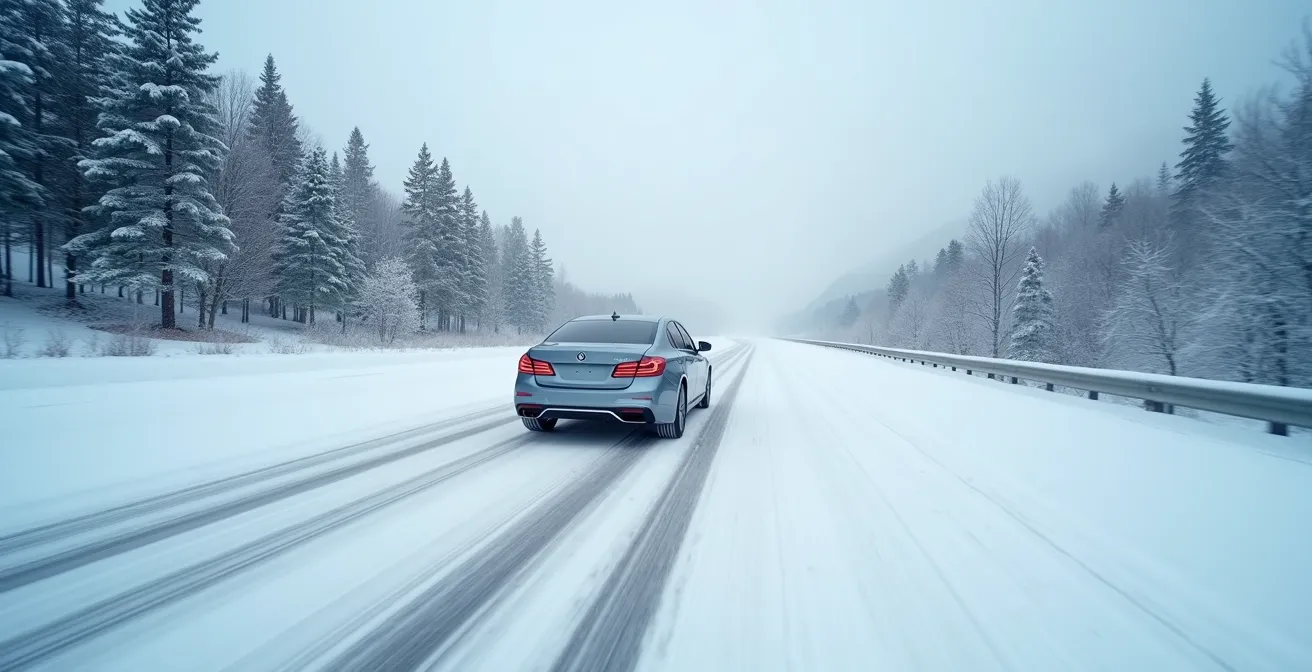
The obsession with SUVs for Quebec winters overlooks a key truth: an AWD sedan often provides superior safety and control when it matters most, thanks to the fundamental laws of physics.
- A lower center of gravity provides inherently better stability in emergency maneuvers on ice and snow.
- Sedans offer a more engaging drive and better tactile feedback, giving the driver crucial warning signs on slippery surfaces.
- From lower purchase prices to slower depreciation in some segments and better fuel efficiency, the sedan is often the more financially sound choice.
Recommendation: Before defaulting to another SUV, seriously re-evaluate the proven dynamic advantages and long-term value a modern all-wheel-drive sedan offers for navigating Canadian winters.
The first heavy snowfall blankets Quebec, and the conversation inevitably turns to one topic: the right vehicle for winter. For years, the default answer has been unequivocal—an SUV or a truck. The perceived wisdom is that a high driving position and maximum ground clearance are the ultimate assets for conquering snow-choked streets and icy highways. This has created a landscape where capable, comfortable, and efficient all-wheel-drive sedans are often overlooked, dismissed as insufficient for the rigors of a true Canadian winter.
But this prevailing belief ignores the fundamental laws of physics that govern a vehicle’s behaviour under duress. While SUVs offer clear advantages in deep, unplowed snow, the most common and dangerous winter driving situations—sudden avoidance maneuvers on a slippery highway, navigating a patch of black ice on a bridge, or maintaining control in slush—are dictated by a vehicle’s stability, not its height. The very characteristics that give an SUV its commanding view can become liabilities when control is paramount.
This article will challenge the SUV-as-default mindset. We will dissect why an AWD sedan is not just a viable alternative but, in many critical aspects, a dynamically superior and more intelligent choice for the driver who values control, feedback, and efficiency. We will explore the physics of handling, the nuances of AWD technology, the overlooked practicalities, and the hard financial numbers that build a compelling case for the modern AWD sedan as the purist’s choice for winter driving in Quebec.
To fully understand this argument, we will explore the key facets that define a truly capable winter vehicle, from its inherent dynamic stability to the long-term cost of ownership. This guide breaks down the critical comparisons and considerations to help you make a more informed decision.
Summary: The Definitive Guide to AWD Sedans vs. SUVs for Canadian Winters
- Why does a sedan handle better than an SUV in an avoidance maneuver?
- Subaru Symmetrical vs Audi Quattro: which system really dominates on the ice?
- The depreciation trap: do sedans lose more value than trucks?
- How to pack a sedan’s trunk for a family camping trip?
- When to change the rear differential fluid to avoid suspicious noises?
- The myth of the invincible 4×4: why your SUV still slides without good winter tires?
- The lane change error that causes 30% of side-impact accidents on highway
- Black Ice Driving Techniques: How to Regain Control on Frozen Roads
Why Does a Sedan Handle Better Than an SUV in an Avoidance Maneuver?
The single most important factor in a vehicle’s stability is its center of gravity. A lower center of gravity means a vehicle is less prone to lean, sway, and, in the worst-case scenario, roll over during a sudden change of direction. This isn’t a matter of opinion; it’s pure physics. Sedans, by their very design, have their mass concentrated much closer to the ground than SUVs. When you suddenly swerve to avoid a deer or a patch of ice on the highway, that lower mass is inherently more stable and easier to control.
Data from safety authorities consistently reinforces this principle. While modern electronic stability controls have made SUVs much safer than their predecessors, they still can’t defy physics. An analysis of NHTSA data highlights that even modern SUVs can have a rollover chance of 14-23% in certain crash scenarios, compared to around 10% for passenger cars. This is the statistical reality of a higher center of gravity. It creates more body roll, which can unsettle the vehicle and the driver, making recovery from a slide more difficult.
This isn’t just about extreme situations. In any corner, an SUV’s body will lean more than a sedan’s, transferring weight to the outside tires and reducing the grip of the inside tires. An AWD system can only work with the grip available. As one analysis bluntly put it, the very thing many people love about SUVs is their greatest weakness in an emergency.
That great bird’s-eye view that comes from an elevated driver’s perch—raising the center of gravity—is arsenic for handling.
– MotorTrend, MotorTrend analysis on SUV handling dynamics
For a driver who prioritizes the feeling of being connected to the road and having the most stable platform possible, the sedan’s fundamental design offers an undeniable advantage. In a critical moment on a slick Quebec road, that stability can be the difference between a close call and a serious accident.
Subaru Symmetrical vs Audi Quattro: Which System Really Dominates on the Ice?
Once we accept the sedan’s dynamic platform advantage, the next question is the all-wheel-drive system itself. Not all AWD is created equal, and two names consistently dominate the conversation: Subaru’s Symmetrical All-Wheel Drive and Audi’s Quattro. While both are legendary, they represent different philosophies of traction management, particularly relevant on the ultra-low grip surface of ice.
Subaru’s Symmetrical AWD is a proactive, full-time system. Its entire drivetrain, from the engine to the rear differential, is designed in a straight, symmetrical line. This inherent balance is key to its philosophy. Power is continuously sent to all four wheels, all the time. On ice, this means there’s no delay waiting for a wheel to slip before power is redistributed. The system is always engaged, providing a consistent and predictable response that many winter driving purists prefer. It’s designed for maximum stability from the moment you touch the throttle.
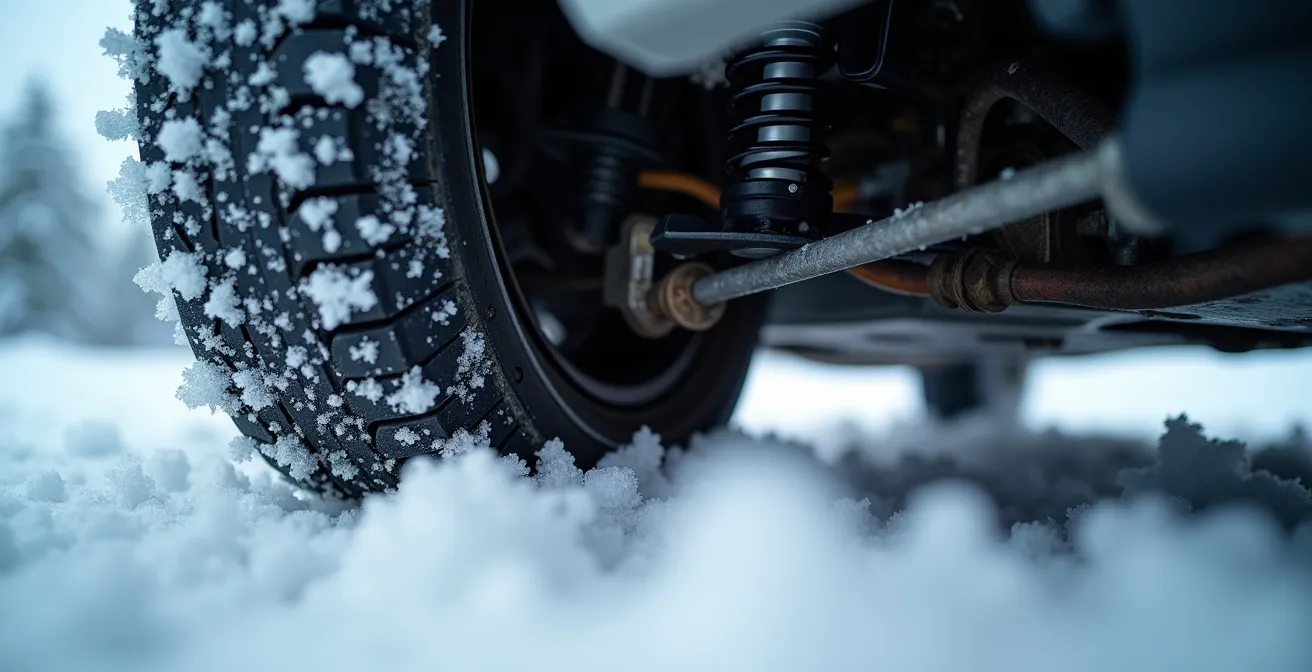
Audi’s Quattro, while also a brand name for various systems, is historically known for its Torsen centre differential, which can mechanically and instantaneously route power to the axle with more grip. Many modern Quattro systems (and those of other manufacturers) are more reactive. They operate primarily in front-wheel or rear-wheel drive for efficiency, and only engage the other axle when wheel slip is detected. While this process is incredibly fast—often milliseconds—it is still a reaction to a loss of traction, not a prevention of it. On pure ice, that split-second of initial slip before the system engages can be unnerving for some drivers.
So which is better on ice? It depends on the driver. The Subaru approach offers a feeling of unwavering, predictable stability. The Audi approach offers incredible efficiency with on-demand traction that is more than capable for 99% of situations. For the purist navigating treacherous conditions, the constant engagement and perfect balance of a system like Subaru’s Symmetrical AWD often provide a greater sense of confidence and control when traction is at an absolute premium.
The Depreciation Trap: Do Sedans Lose More Value Than Trucks?
The decision to purchase a vehicle isn’t just about performance; it’s a major financial commitment. A common argument in favour of trucks and SUVs in Canada is their strong resale value. The market demand is high, so they tend to hold their value better than other vehicle types. While this is broadly true, especially for pickup trucks, the picture for AWD sedans versus SUVs is more nuanced and can often defy expectations.
The primary factor driving depreciation is market demand. In recent years, the high demand for compact and mid-size SUVs has indeed helped their resale values. However, this has created a market where AWD sedans are often a smarter buy, both new and used. Because they are less trendy, their initial purchase price can be lower than a comparably equipped SUV, and the depreciation curve, while sometimes steeper, starts from a lower point. For a buyer focused on the total cost of ownership, the entry price is just as important as the exit value.
Let’s look at the numbers. While a pickup truck may only lose 30-45% of its value over five years, and an SUV may lose 35-50%, sedans typically see a wider range. However, certain AWD sedans with strong reliability records (like a Subaru Legacy or Toyota Camry AWD) often perform much better than the average, placing them well within the SUV depreciation window. The key is to look beyond the general category and at the specific model. The following table from a Canadian analysis of vehicle depreciation illustrates the general trends.
| Vehicle Type | 5-Year Depreciation | Annual Rate | Key Factor |
|---|---|---|---|
| AWD Sedans | 45-55% | 10-15% | Lower demand vs SUVs |
| Compact SUVs | 35-50% | 8-12% | High market demand |
| Pickup Trucks | 30-45% | 7-10% | Utility value retention |
When you factor in the typically better fuel economy of a sedan due to its lower weight and more aerodynamic profile, the long-term financial picture becomes even more compelling. The “depreciation trap” is real, but it often catches those who follow trends without calculating the total cost of ownership. For a logical buyer, an AWD sedan can be the more financially astute choice.
How to Pack a Sedan’s Trunk for a Family Camping Trip?
Perhaps the most persistent argument against the sedan is its perceived lack of practicality. “Where will I put the hockey bags? What about the gear for a camping trip to Parc national de la Mauricie?” The cavernous cargo holds of SUVs seem to offer an unassailable advantage. However, this often stems from a misunderstanding of how to use space efficiently. A sedan’s trunk, when packed intelligently, can be surprisingly capacious, and its form factor offers unique advantages.
The key to maximizing a sedan’s utility is strategic organization, not just throwing things in. Unlike an SUV’s tall, open cargo area where items can shift and block rear visibility, a sedan’s trunk is a contained, defined space. This encourages more thoughtful packing. Furthermore, many modern AWD sedans come with features like 60/40 split-folding rear seats and a centre pass-through (ski-sack), which dramatically increase their versatility for carrying long, awkward items without needing an expensive roof rack.
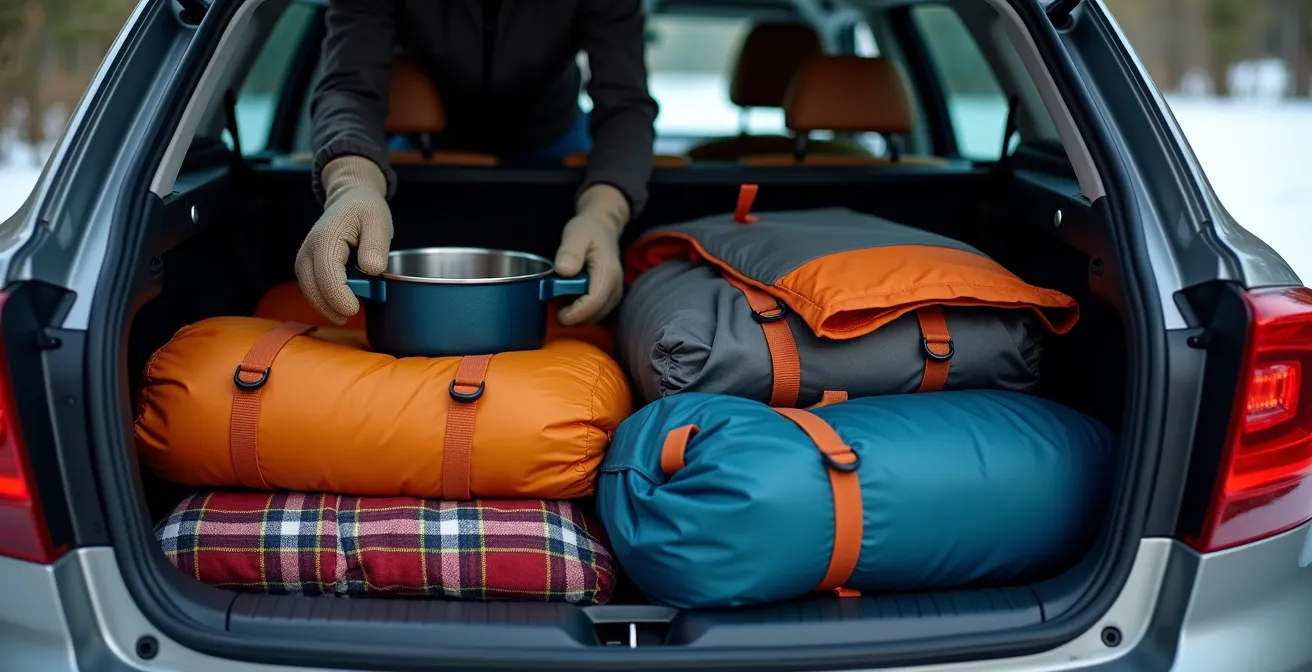
Packing for a family trip becomes a game of Tetris, where every item has its place. Using compression sacks for clothes and sleeping bags can reduce their volume by half. Packing heavier items like coolers and camp stoves against the back seat helps maintain the car’s low center of gravity and optimal weight distribution—a crucial safety factor that is often compromised in a top-heavy, overloaded SUV. The following checklist outlines a systematic approach to turning your sedan into a surprisingly capable gear-hauler.
Your Action Plan: Packing a Sedan for Maximum Utility
- Utilize the ski pass-through: Ideal for long items like skis, fishing rods, or tent poles, keeping them secure inside the vehicle.
- Distribute weight properly: Place the heaviest items (coolers, water jugs) deep in the trunk, pushed up against the rear seatback to preserve handling balance.
- Leverage compression sacks: Squeeze the air out of soft goods like sleeping bags, pillows, and clothing to drastically reduce their volume.
- Use side compartments for essentials: Store your mandatory Quebec winter emergency kit (shovel, traction aids, booster cables) in the trunk’s side pockets for quick access without unloading everything.
- Consider an aerodynamic cargo box: If more space is truly needed, a rooftop box creates far less aerodynamic drag and wind noise on a sleek sedan than on a tall, boxy SUV, preserving fuel efficiency.
With a little planning, the sedan’s perceived weakness becomes a lesson in efficiency. It forces a smarter approach to packing that not only fits everything you need but also maintains the vehicle’s inherent safety and dynamic advantages.
When to Change the Rear Differential Fluid to Avoid Suspicious Noises?
A capable winter vehicle is more than just its design; it’s a complex mechanical system that requires proper maintenance to perform reliably in harsh conditions. For any AWD vehicle, the differentials and transfer case are the heart of the system, and their health is paramount. Driving in Quebec automatically qualifies as “severe service” in any manufacturer’s maintenance schedule due to extreme temperature swings, road salt, and the constant work the AWD system does on slippery surfaces.
The differential fluid is crucial. It lubricates the complex gears that distribute power and allows for the slight difference in speed between the inside and outside wheels when turning. In winter, this fluid is subjected to immense thermal stress. It goes from frigid cold (-30°C) to operating temperature repeatedly, which can degrade its viscosity and protective properties over time. Contamination from moisture and microscopic metal particles also occurs, reducing the fluid’s effectiveness.
Ignoring this service item can lead to premature wear and expensive repairs. The most common symptom of failing or contaminated differential fluid is a groaning or binding noise when making tight, slow-speed turns, for example, in a snowy parking lot. This sound indicates the clutches or gears in the differential are not engaging smoothly, often because the fluid has lost its friction-modifying properties. If you hear this, it’s a clear signal that service is overdue.
For Quebec drivers, adhering to the “severe service” interval in your owner’s manual is not optional; it’s essential. This often means changing the differential and transfer case fluids at half the “normal” recommended mileage, typically every 50,000 to 60,000 kilometers instead of 100,000+. This preventative maintenance is a small investment that ensures your AWD system is ready to perform when you need it most, preserving the longevity and safety of your vehicle.
The Myth of the Invincible 4×4: Why Your SUV Still Slides Without Good Winter Tires?
We’ve established the dynamic advantages of a sedan’s platform and the nuances of AWD technology. However, all of these discussions are meaningless without addressing the single most critical component for winter safety: your tires. There is a dangerous misconception that an advanced AWD system can compensate for improper tires. This is false. AWD does one thing: it helps you accelerate from a stop or in a slippery situation. It does almost nothing to help you turn or, more importantly, stop.
Braking and turning are almost entirely dependent on the friction between your tire’s rubber compound and the road surface. A winter tire is engineered with two key features. First, a rubber compound that stays soft and pliable in freezing temperatures, allowing it to conform to the road surface. An all-season tire’s compound becomes hard and slick like a hockey puck below 7°C. Second, a winter tire has a tread pattern with thousands of tiny slits called “sipes,” which bite into snow and ice to provide grip.
As a seasoned winter driving instructor in Quebec memorably states, the division of labour is clear:
Your AWD system decides if you can leave the snowy parking spot. Your tires decide if you can stop before hitting the car at the bottom of the hill.
– Winter driving instructor, Quebec winter driving safety course
Tire testing from major manufacturers confirms this in no uncertain terms. On snow and ice, a two-wheel-drive vehicle with proper winter tires will consistently outperform an all-wheel-drive vehicle on all-seasons in both braking and cornering. In fact, Bridgestone tire testing reveals that an AWD system provides negligible benefit for turning and braking on snow compared to a 2WD car with the same all-season tires. The takeaway is absolute: investing in a premium set of winter tires (as mandated by law in Quebec) is the most important safety decision you can make, regardless of your vehicle’s drivetrain.
The Lane Change Error That Causes 30% of Side-Impact Accidents on Highway
The principles of stability and center of gravity are not just theoretical. They have life-or-death consequences in common, real-world Quebec driving scenarios. One of the most hazardous is changing lanes on a highway like the 20 or 40 during a winter storm or a spring thaw. The lanes are often separated by a ridge of heavy, wet slush, which can act like a barrier, grabbing at your wheels.
Case Study: The Physics of the Slush Barrier
When a vehicle’s front wheel hits a dense slush ridge at highway speed, it experiences a sudden and powerful decelerative force on one side. This creates a yaw moment, pulling the vehicle’s nose sharply in that direction. In an SUV, with its higher center of gravity and longer, softer suspension travel, this pull can be more violent. The vehicle’s body can lean more dramatically, unsettling the chassis and increasing the risk of the driver over-correcting, leading to a spin or loss of control. A sedan, with its lower center of gravity and typically firmer suspension, is less susceptible to this dramatic weight transfer. It will still be pulled by the slush, but the effect is often less severe and more manageable, allowing the driver and the AWD system to correct it with less drama.
The most dangerous driver error in this situation is an abrupt reaction. Panicking and yanking the wheel back, or lifting off the throttle suddenly, can destabilize the vehicle. The correct technique requires a smooth, deliberate approach. You should maintain a steady, light throttle as you cross the slush ridge. This keeps all four wheels powered and allows the AWD system to actively manage traction. Your steering inputs should be minimal and calm; look where you want to go, not at the slush you are crossing.
Crossing the ridge at a slight, shallow angle rather than a sharp one can also reduce the suddenness of the impact. This scenario is a perfect illustration of why a sedan’s inherent stability provides a greater margin of safety. It’s less about raw power and more about maintaining composure, a task made significantly easier when your vehicle is fundamentally more stable to begin with.
Key Takeaways
- An AWD sedan’s low center of gravity is its single greatest safety asset, providing superior stability in emergency winter maneuvers.
- All-wheel-drive systems help you accelerate, but only quality winter tires, as mandated in Quebec, allow you to turn and brake effectively on ice and snow.
- From lower initial purchase prices to better fuel economy and often competitive depreciation, an AWD sedan can be a more financially efficient choice than a comparable SUV.
Black Ice Driving Techniques: How to Regain Control on Frozen Roads
All of the principles of winter driving converge in the face of the most treacherous and unpredictable hazard: black ice. It is the ultimate test of both vehicle and driver. Common black ice hotspots in Quebec are notorious—overpasses on the Métropolitaine in Montreal, bridge decks crossing the St. Lawrence, and shaded, tree-lined cottage roads where the sun never melts the frost. In these situations, the difference between maintaining control and a dangerous slide is measured in milliseconds and millimeters of driver input.
This is where the combination of a good AWD system and the tactile feedback of a sedan truly shines. When you hit a patch of black ice, all four wheels lose traction simultaneously. Professional winter driving analysis indicates that a full-time, proactive AWD system provides a more predictable response because it’s not reacting to the slip; it’s already distributing power. The key for the driver is to remain calm. Do not slam on the brakes, which will lock the wheels and guarantee a slide. Do not make sudden steering corrections. Gently ease off the throttle and keep the steering wheel pointed exactly where you want to go.
Crucially, a sedan’s lower seating position and more direct connection to the chassis can provide an earlier warning. Many experienced drivers describe feeling a subtle “lightness” or lack of resistance in the steering just moments before a full slide occurs. This is the tactile feedback that a taller, more isolated SUV often filters out. That split-second warning allows the driver to prepare, relax their grip, and look ahead, dramatically increasing the chances of navigating the patch safely.
If the rear of the car begins to slide (oversteer), you must make a small, smooth steering correction in the same direction as the slide. If the rear slides right, steer slightly right. As soon as the car begins to straighten out, you must immediately bring the wheel back to center to avoid sliding back the other way. These are delicate, precise movements, far easier to execute in a stable, responsive platform than in a top-heavy vehicle prone to larger oscillations.
Ultimately, the choice of vehicle is personal, but it should be an informed one. By looking past the marketing and the prevailing trends to understand the core principles of vehicle dynamics, safety, and long-term value, the AWD sedan emerges not as a compromise, but as the purist’s choice for the driver who demands control and connection on the challenging roads of a Quebec winter. Evaluate your true needs, test-drive both platforms, and choose the tool that makes you a safer, more confident driver.
Frequently Asked Questions on AWD Sedans in Quebec Snow
How do Canadian winters affect differential fluid?
Extreme temperature fluctuations and constant traction changes put severe thermal stress on differential and transfer case fluids, requiring more frequent service intervals. The fluid can degrade faster, losing its ability to properly lubricate and protect the gears.
What symptoms indicate differential problems in winter?
Listen for binding or groaning sounds when making tight, slow-speed turns in snowy parking lots. This is often a sign that the clutch packs in the differential are not engaging smoothly because the specialized fluid has broken down and needs changing.
Should Quebec drivers follow severe service schedules?
Yes, absolutely. Driving in Quebec’s climate—with its heavy snowfall, road salt, and extreme temperature swings—automatically qualifies as “severe service” according to virtually all manufacturer maintenance guidelines. This means fluid changes and inspections should be done more frequently than the “normal” schedule.